
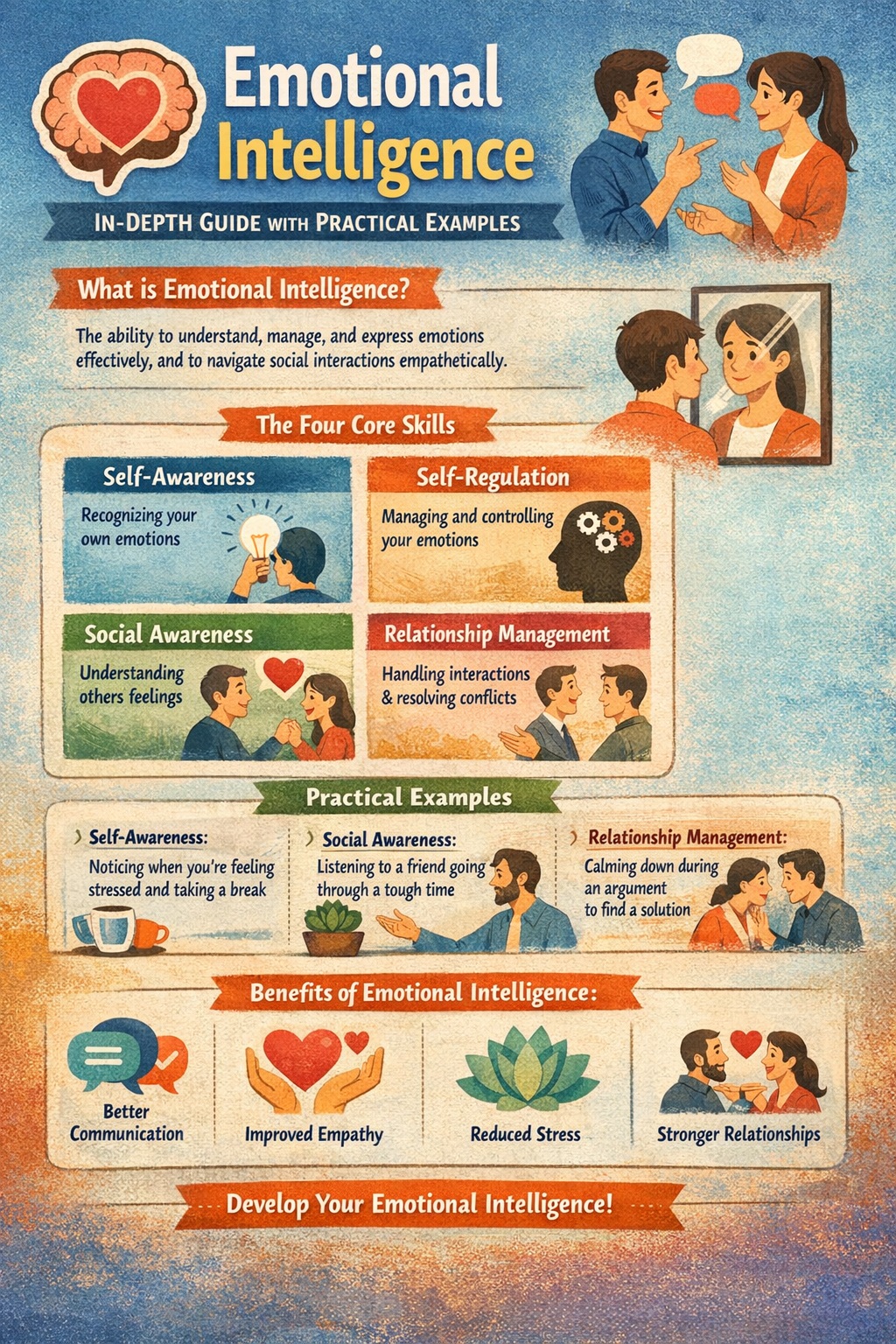
In today’s fast-paced world, emotional intelligence (EI) has become more important than ever. Understanding your own emotions and those of others determines your success and your ability to cope with daily pressures.
Emotional intelligence is the ability to recognize and manage your own emotions as well as the emotions of others. It has many benefits, including improving personal relationships, increasing productivity, and making better decisions. To develop it, one can practice mindfulness, self-reflection, and learn effective communication skills.
Practical Example to Illustrate Emotional Intelligence
Imagine this scenario: You are in a work meeting and notice a colleague looking tense and frustrated while presenting an idea. Instead of reacting impulsively or ignoring it, you pause and try to understand the reason, then calmly say: “I can see this topic is stressful for you. Can I help you explain your idea more clearly?”
In this way, you recognize your own emotions and notice the emotions of others, taking positive action that helps everyone. This is genuine emotional intelligence.
Why Emotional Intelligence Matters in the Workplace
- Team collaboration: People with high EI communicate better and work more effectively in groups.
- Conflict resolution: EI helps manage disagreements constructively.
- Effective leadership: Leaders with strong EI inspire and motivate their teams.
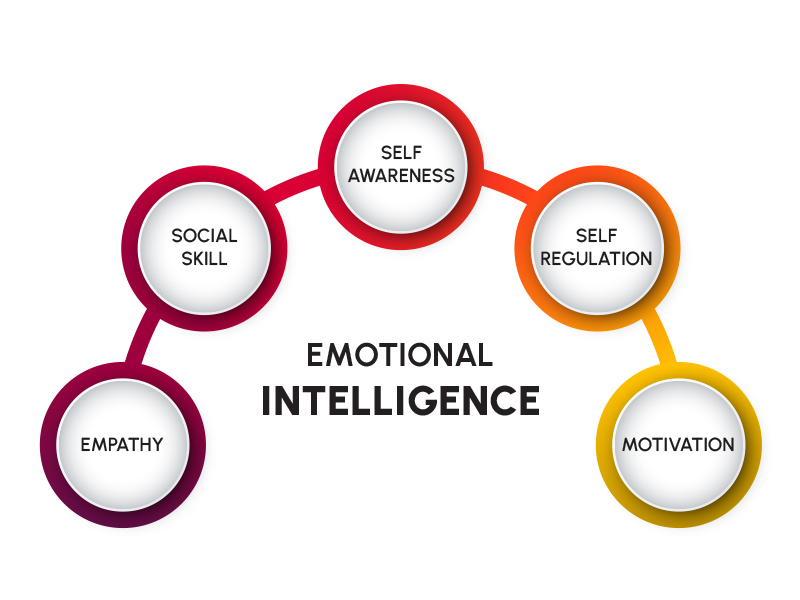
Practical Strategies to Develop Emotional Intelligence
- Keep an emotional journal to track daily emotions and understand patterns.
- Seek feedback from colleagues about your emotional behavior and its impact on others.
- Use deep breathing techniques to reduce stress before important decisions or meetings.
Emotional Journaling and Recognizing Emotional Patterns
One of the most effective ways to develop EI is keeping an emotional journal. The goal is not just to record your feelings, but to understand the patterns behind them.
When journaling, make sure to record:
- The emotions you felt (joy, sadness, anxiety, anger…).
- The situation or context – when and where you experienced the emotion.
- Triggers or causes – what led to this feeling.
- Physical and emotional responses – how this feeling affected your body or behavior.
Practical example:
- Emotion: Anxiety
- Situation: Important work meeting
- Trigger: Feeling that your opinion might not be accepted
- Response: Rapid heartbeat, bodily tension, difficulty focusing
After several days, you will notice recurring patterns. Another example:
- Emotion: Frustration
- Situation: A suggestion of yours gets rejected
- Trigger: Feeling that your effort is unappreciated
- Pattern: Every time you feel undervalued, frustration appears along with some physical tension
By recognizing these patterns, you can take practical steps to manage your emotions, such as deep breathing before meetings, reassessing the situation, or choosing more effective communication methods.
Managing Emotional Stress, Harmful People, and Turning to God
Even when practicing daily journaling or meditation, a person remains exposed to life’s continuous pressures. In these moments, turning to God, the Creator of everything, and sincerely raising your concerns and prayers to Him provides deep inner peace and relief from stress.
Believers experience reassurance because they know that God is all-wise, all-knowing, and in control of all matters, and that He hears their complaints, understands the pressures and sorrows they face, and can grant help, support, and ease in their lives.
At the same time, one must be cautious of others who may exploit your emotional vulnerability, such as narcissists, hypocrites, or envious people, who might attempt to distort the truth, manipulate situations, or use your emotional state for their personal gain, instead of offering genuine help.
Alongside seeking comfort and support from God, it is also important to:
- Maintain clear boundaries with others, and avoid revealing all your weaknesses or anxieties to those who might exploit them.
- Rely on trusted sources of support: a close friend, a counselor, or a healthy support group.
This helps readers balance true spiritual support, self-awareness, and practical protection from harmful people, making them better equipped to manage life’s pressures with awareness and peace.
The Difference Between True Emotional Intelligence and Emotional Acting
Genuine empathy is a core part of emotional intelligence, while some people can simulate empathy for personal gain.
Psychologists note that certain individuals with personality disorders, such as narcissism or psychopathy, display empathetic behavior as a mask, but they do not genuinely feel it. These individuals use their ability to read others’ emotions to manipulate or exploit them, not to genuinely connect or help.
Therefore, emotional intelligence cannot be developed through training for these individuals, because they completely lack the ability to truly feel emotions. Normal individuals, however, can enhance their emotional intelligence through practice and self-awareness.

Frequently Asked Questions
Q: Can anyone develop emotional intelligence?
A: Yes, EI is a skill that can be improved with daily practice and self-training.
Q: What is the difference between emotional intelligence and IQ?
A: IQ relates to analytical and logical abilities, while EI focuses on understanding and managing emotions.
Reader Engagement Question
What do you think about the importance of emotional intelligence in daily life? Share your opinion in the comments!
YOU MAY BE INTERESTED IN:
Leave a Reply
You must be logged in to post a comment.